Pressure testing
- Finds
- Whether there is a leak at all, and how big
- Will not find
- Where it is, this sizes the problem, it does not place it
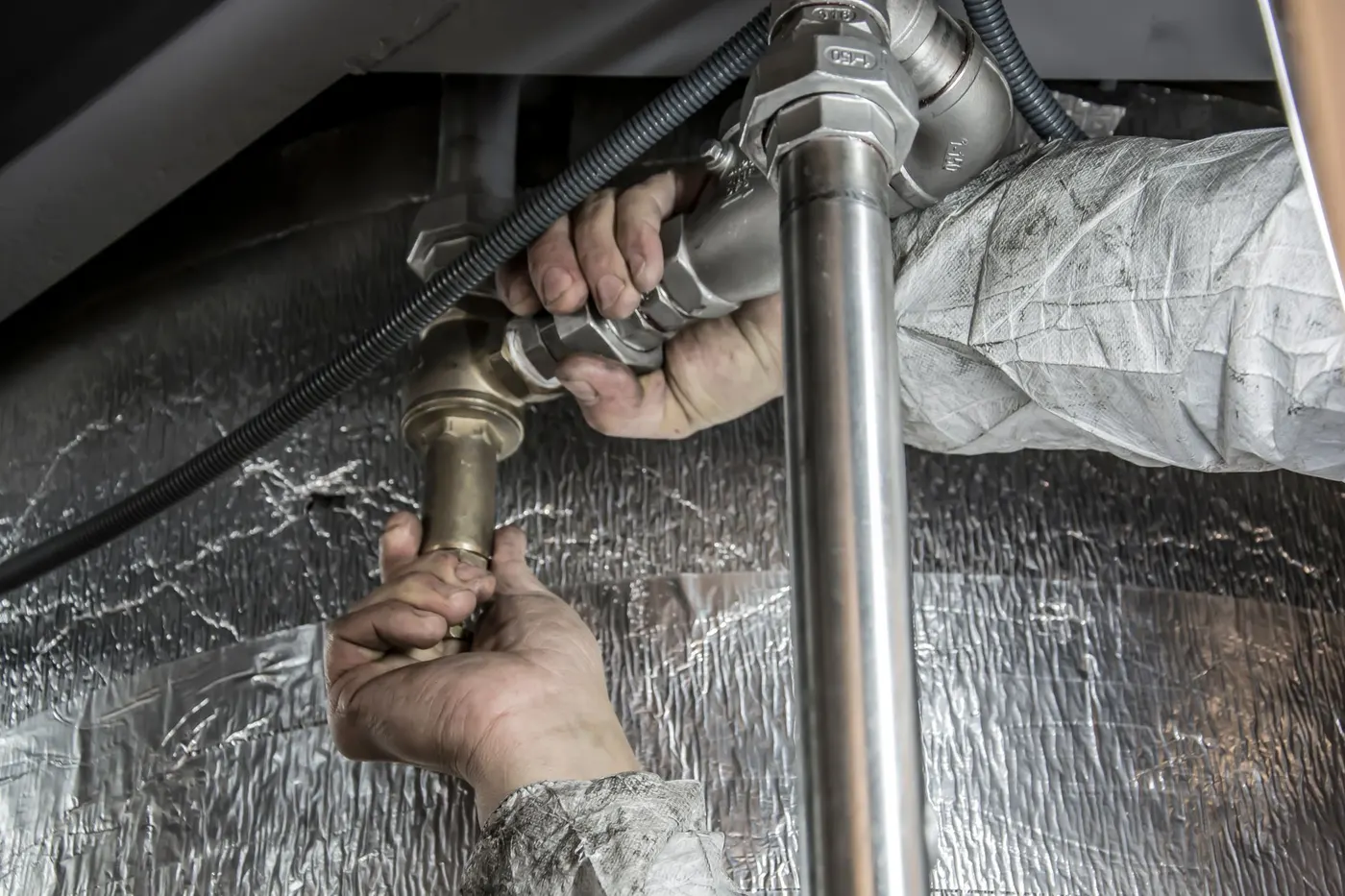
Cylinder replacement, repair and servicing across London, on every make we meet: Megaflo, Telford, Gledhill, Joule, OSO and the rest. We also find the leaks and fix the plumbing around them, then put the floor, wall or ceiling back. One team, one rate.
£150 per hour · £50 call-out · 20 engineers across London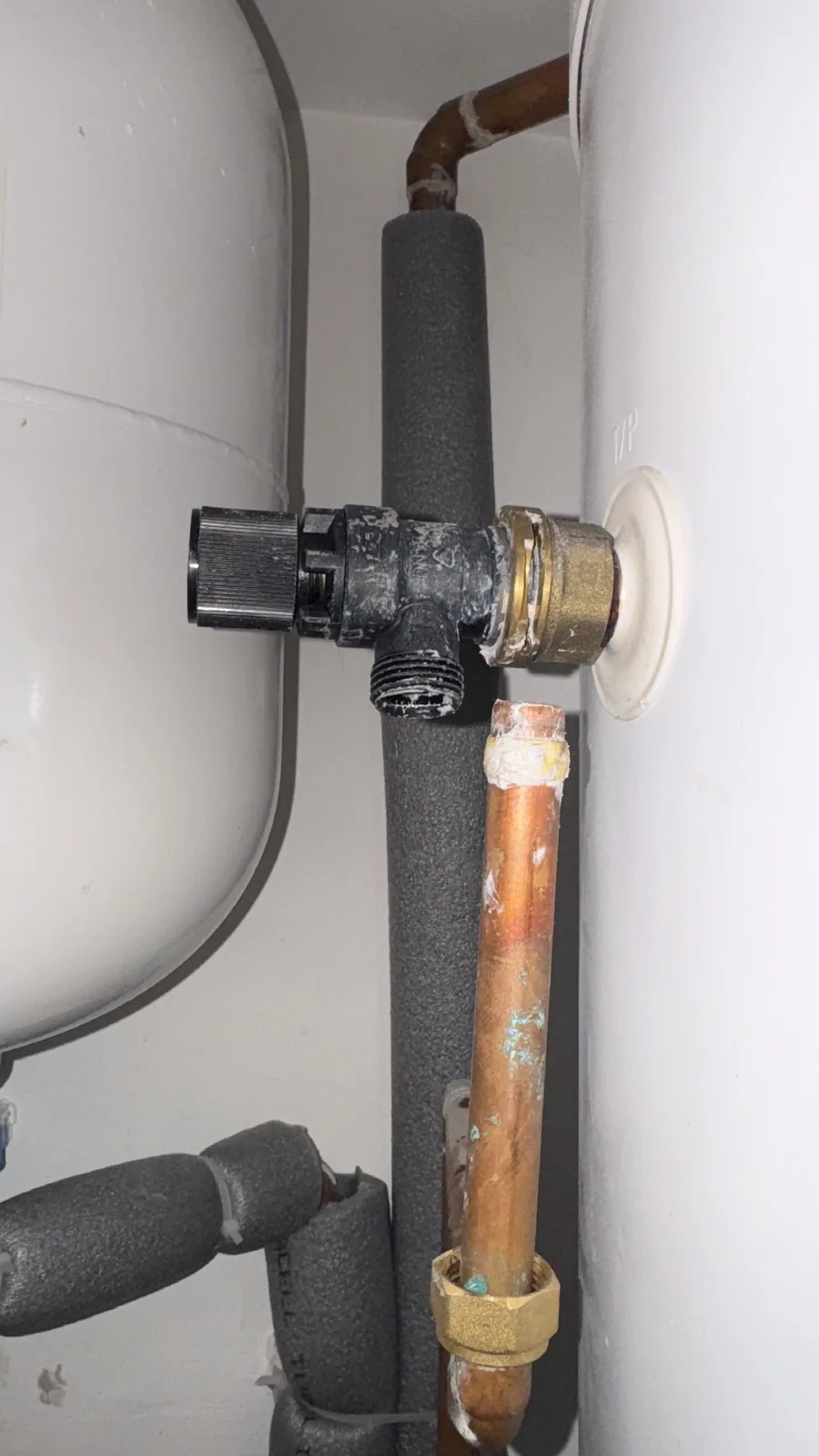
Services
When the coil has scaled solid, the copper has pinholed or the foam insulation has failed, repair stops being sensible. We size the replacement to the real bathroom count and incoming main, not to whatever was fitted last time.
Learn more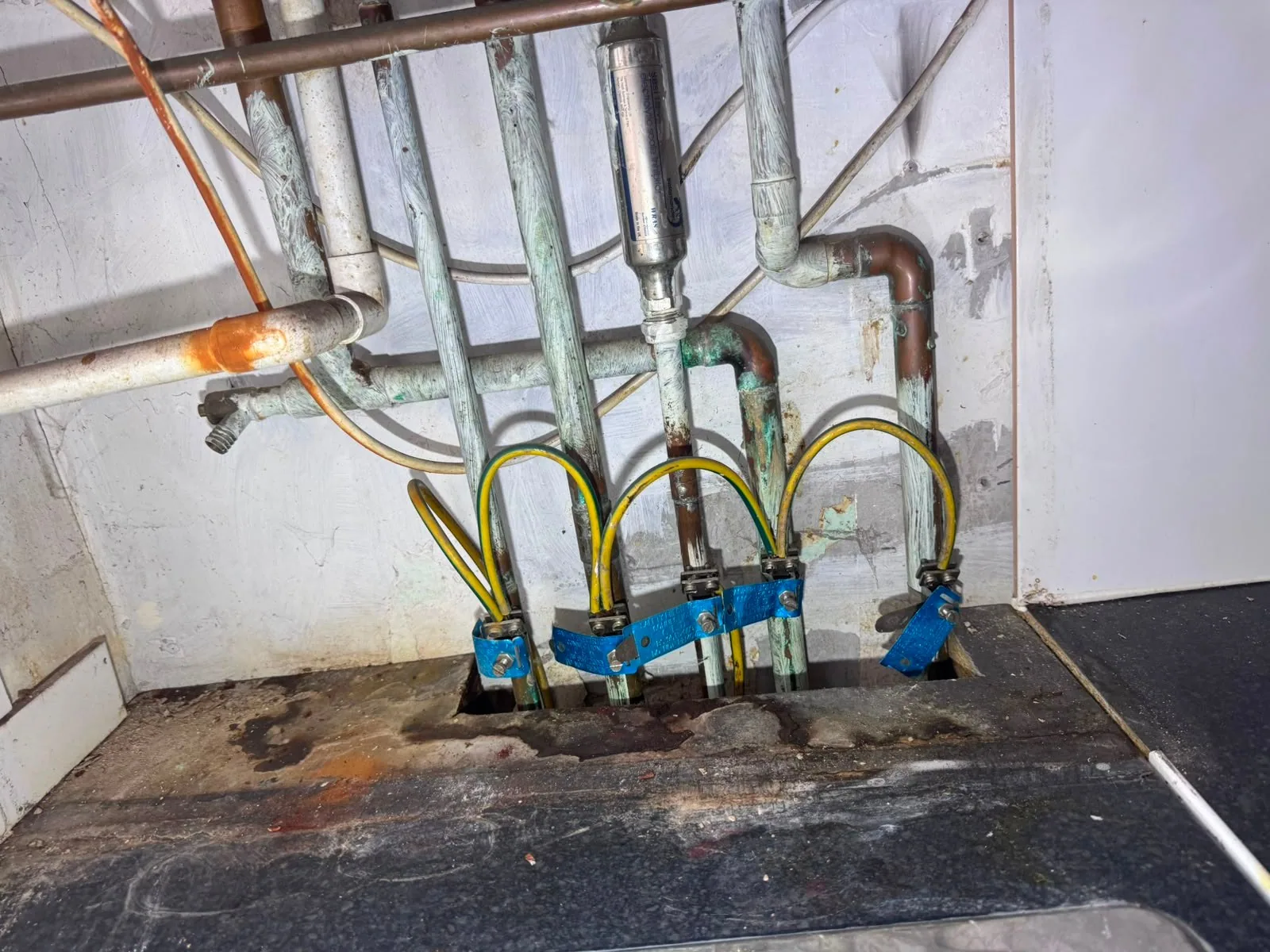
Unvented cylinders rarely fail at the cylinder. It is usually the expansion vessel losing its air charge, a pressure reducing valve drifting, or a relief valve passing to the tundish. We recharge or renew the vessel and reset the inlet group.
When the coil has scaled solid, the copper has pinholed or the foam insulation has failed, repair stops being sensible. We size the replacement to the real bathroom count and incoming main, not to whatever was fitted last time.
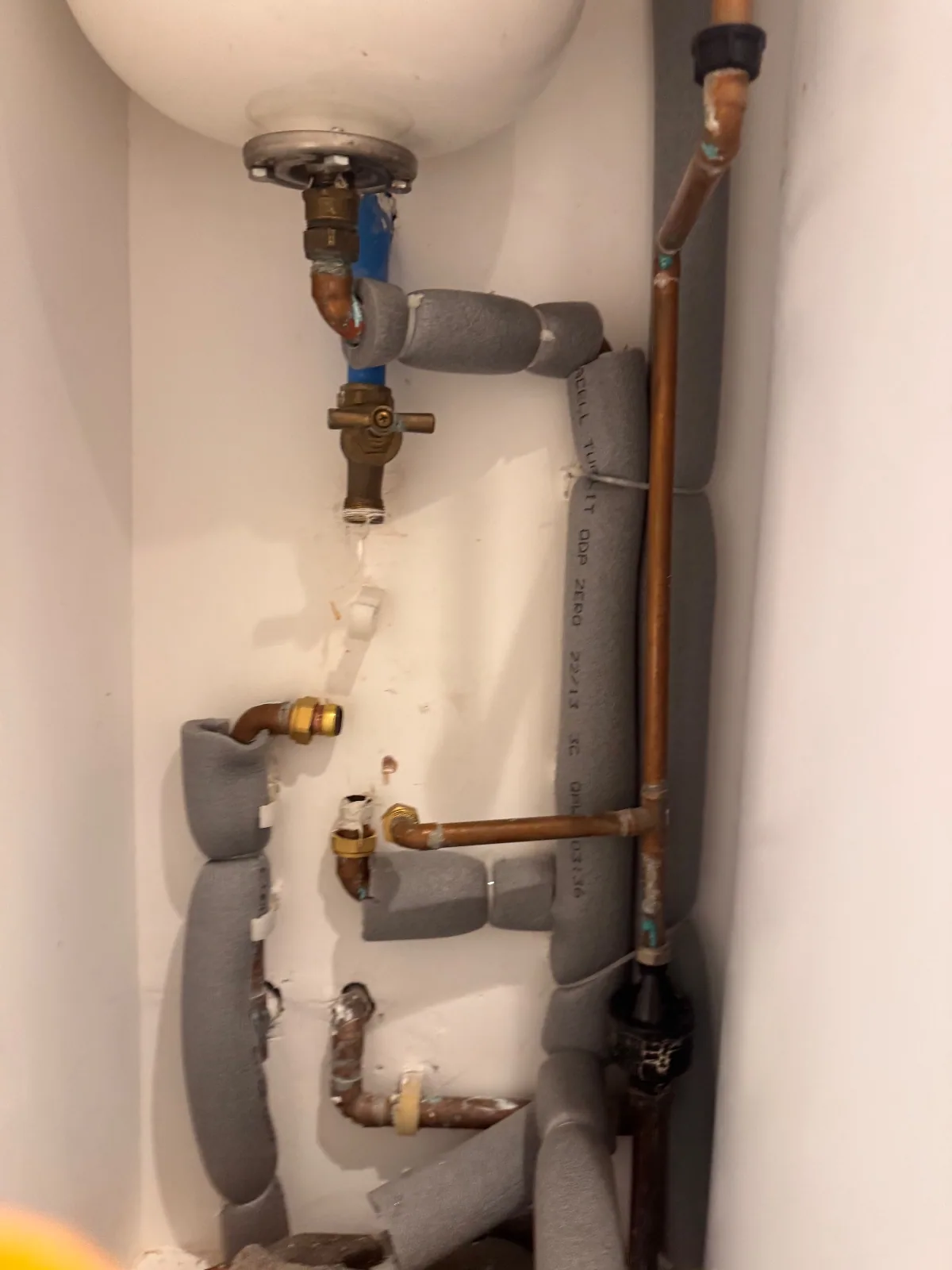 THE RIGHT SIZE
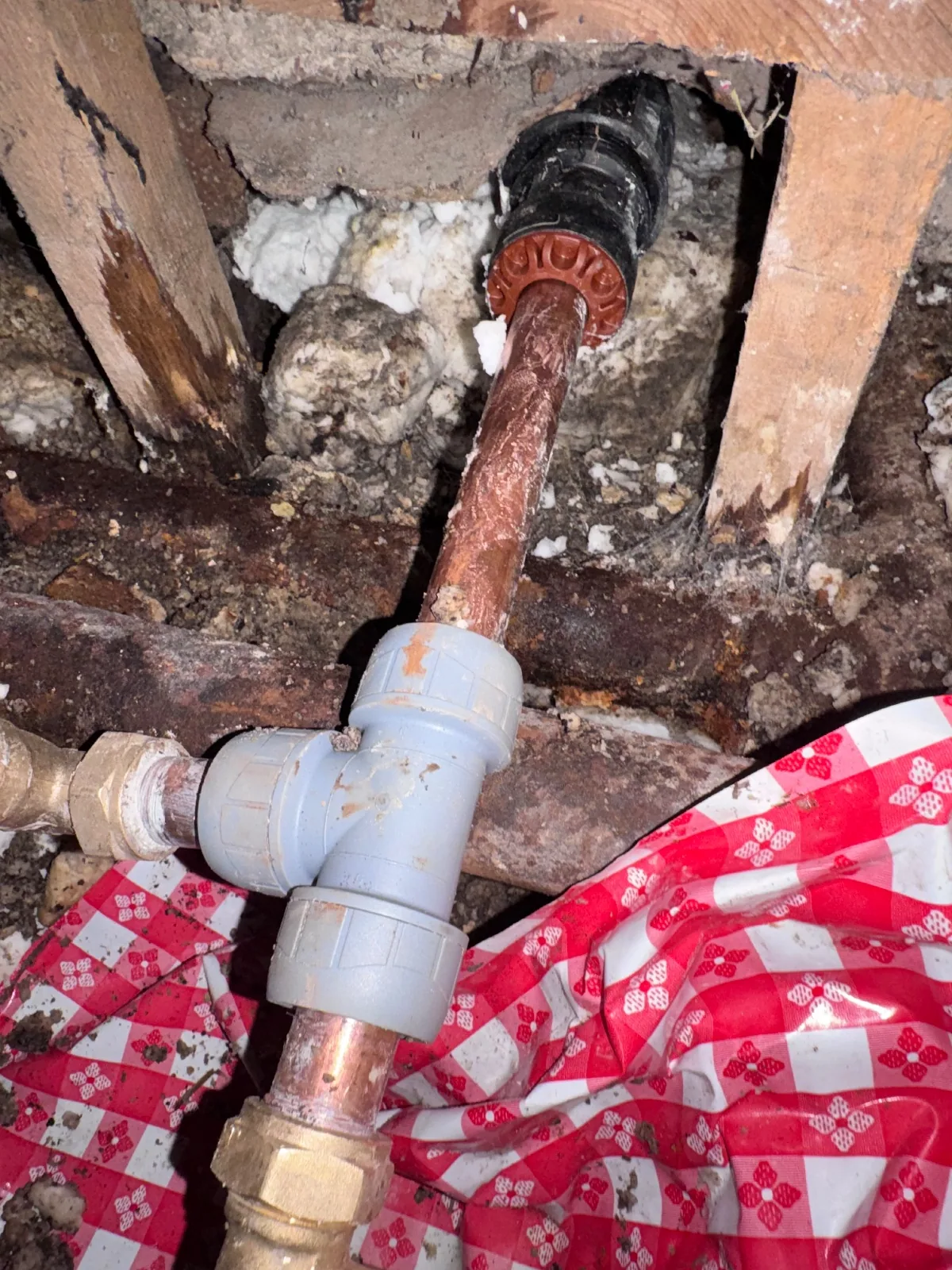 THE FLOOR GOES BACK DOWN
A damp patch is almost never above the leak. We trace it with thermal imaging, acoustic listening and moisture readings before anything is lifted, so we open one small area instead of a room, repair the pipe, then make good.
Cold snaps split pipework in lofts, garages and unheated voids, and tired compression joints let go without warning. We isolate, drain down and repair, then lag what froze so the same run does not burst again next winter.
Lifting a patio, or a liquid screed floor laid over underfloor heating, is slow and expensive. Where the pipe run allows it we line or grout the defect in place through an existing access point and leave the surface alone.
Explore immersion heater repairWhat a tripping breaker or a cold boost switch usually turns out to be.
Why these units behave nothing like an ordinary cylinder.
How scale builds on an element and what it costs you in heat.
DETECTION, REPAIR AND REINSTATEMENT
Most leak companies in London detect only. They find the leak, give you a report and leave you to arrange a plumber, and then a plasterer, and then a tiler. We carry all three, so the job finishes with us rather than starting again with somebody else.
Step One
Pressure testing to prove the loss is real and size it, then acoustic, thermal and non-invasive tracer gas to place it. The floor is opened once, where the leak is.
Step Two
Copper, plastic, lead and heating pipework, cylinders, valves and joints. Most domestic leaks are repaired on the same visit they are found.
Step Three
Our own handymen and builders close the floor, screed, plaster, ceiling or tiling we opened. You are not left holding a hole and a list of other trades to ring.
£150 per hour across all three. Leak detection and general plumbing both carry the same £50 call-out.. No call-out fee and no out-of-hours uplift.
Everything we coverSTART WITH WHAT YOU CAN SEE
The same symptom comes from three or four different faults, and only one of them is worth paying anyone to look at. Find the closest description below. Some of these you can check yourself in five minutes, and we will say so on the phone.
All 12 hot water problemsWHAT ACTUALLY HAPPENS
A visit has four parts and only one of them is the repair. The others are finding the fault, agreeing what to do about it, and putting the building back. An engineer who skips that last part is cheaper on the day and dearer a fortnight later, when you are the one chasing a plasterer.
The rate is fixed before we set off. It does not rise because the cylinder sits in a loft or the visit is in the evening. What moves the total is how long the work takes, so we tell you what we have found before we carry on.
What a visit costsThe call is a diagnosis, not a booking form. We ask where the water is showing and where you think it is coming from, because those are rarely the same place. We ask whether the stopcock is off and whether turning it actually slowed the flow. On hot water we ask what the cylinder or boiler is and what the pressure gauge reads. That decides what the van carries.
Nothing comes up until we know where to lift. A thermal imaging camera reads heat under screed and floorboards, which finds hot pipework quickly. An acoustic ground microphone listens for the hiss of a pressurised main under a solid floor. Tracer gas goes into a drained pipe and rises through the smallest split. A moisture meter and a pressure test on the circuit confirm it before a tile moves.
Before the first cut we tell you what has failed, why it failed and exactly what we are about to open up. Sometimes the job grows. A pinhole at an old lead to copper joint can turn out to be a buried run that will go again next winter. When that happens we stop, show you what we have found, and set out the options, including capping it now and planning the run properly.
Reinstatement is part of the job, not another trade for you to go and find. We cut where a board or a tile can be lifted and relaid, we fill and make good, and we leave the floor walkable and the wall ready for paint. Over underfloor heating we patch liquid screed back to its proper depth. The hole leaves with us.
You are not buying a report. You are buying a working system and a usable room.
Detection, repair and reinstatement sit with one team here, so nobody hands you a hole in the floor and a phone number for somebody else.
Traced. Repaired. Put back.
Our engineers carry pipe, fittings, valves, immersion elements and the spares that fail most often on the cylinders we meet in London, and we hold the trades that close the opening behind us: screed, floorboards, tiles, plaster and making good. On a straightforward leak the damaged section comes out, the new run goes in, the system is refilled and pressure tested, and the floor goes back. Reinstatement is quoted and scheduled as part of the job, not left as somebody else’s problem once the water stops.
One team, from trace to reinstatementExpansion vessels, inlet groups, relief valves and thermostats tested before anything is replaced.
The leak traced before a floor is opened, the pipework repaired, the surface made good after.
Isolated, drained and repaired, then the run that froze is lagged so it does not go again.
Gledhill units in purpose built blocks, where the fault is usually the board, pump or element.
Lined or grouted in place through existing access, so screed, patios and driveways stay down.
Opened once, and closed by us.One visit that ends with the fault proven, the pipework sound and the room usable again.
FOUR METHODS, IN SEQUENCE
No single method finds every leak, and anyone who tells you otherwise is selling the one piece of equipment they own. These run in order, cheapest and least invasive first, and most jobs stop long before the last one.
Every visit ends with a written report prepared to support a trace and access claim, method, findings, thermal images, moisture readings and pressure results, dated. Your insurer decides what your policy covers. How trace and access works
AGREED BEFORE WE SET OFF
Most of the bad stories in this trade start with a price that moved after the van arrived. A figure given blind down the phone is either optimistic, and gets revised upward once the floor is open, or padded so you overpay on the simple jobs. We would rather be exact about the hour and honest about the hours.
The rate is fixed before we attend and does not rise for a difficult property, an awkward access or an evening visit. The total depends on how long the job takes; the rate cannot change.
What is and is not includedCLEAR ANSWERS BEFORE YOU BOOK
Finding the fault is only the beginning. Here is how we handle the repair, the making good, and what happens next.
Talk about your hot waterThe rate is £150 per hour with a £50 call out, agreed before an engineer sets off. It does not rise for a Victorian conversion, a third floor flat with no lift, a stopcock buried behind a fitted kitchen or a visit at seven in the evening. What moves the total is how long the work takes, and that is the part nobody can tell you down the phone honestly. A weeping service valve under a sink is one job. Chasing water through a floor void is another. You hear how the clock is running on the day, not at the end.
Often, yes. There are 20 engineers across London, so same day cover is usually a question of who is closest and what he is in the middle of. We will not hand you a window we cannot hold. Describe the fault and the property when you call and we will say plainly whether it is today, this evening or tomorrow morning. If water is running and you cannot stop it, say that first. Shutting the stopcock and draining down at the cold taps buys you time and costs you nothing.
We repair. The engineer who traces the fault is the engineer who fixes it, on the same visit wherever the parts allow. A good part of this trade has drifted into detection as a product of its own: somebody arrives with a camera, marks an X on your floor, emails a report and invoices you, and you are left to find a plumber to do the actual work. Our vans carry the valves, fittings, immersion elements and cylinder controls that fail most often in London, so diagnosis and repair are one job rather than two.
Yes, and we say so before we lift anything. Reinstatement is part of the job, not something you chase afterwards. Floorboards go back down, chased plaster is made good, a ceiling opened to reach a joint is patched and left ready to decorate. Engineered wood and tile we talk through first, because a tile out of production for ten years cannot be matched and pretending otherwise helps nobody. Liquid screed over underfloor heating is its own conversation: we open the smallest area that gets a tool to the pipe, and agree the finish before anything is cut.
It happens, and we tell you rather than guess. The intermittent ones are the difficult ones: a joint that only weeps under full mains pressure, or a heating pipe that only gives itself away once the system has been hot for an hour. What you get at the end of that visit is what has been ruled out, which circuits were isolated and pressure tested, where the moisture readings sat and what a second visit would involve. A ruled out list is worth more than a confident answer that turns out to be wrong and costs you a floor.
By narrowing it down before any tool touches the floor. Isolate sections and watch what the pressure does, because a circuit that holds is a circuit you never open. Thermal imaging picks up the warm track of a heating leak under screed. Acoustic equipment listens for pressurised water escaping, which has a sound of its own once the house is quiet. Tracer gas goes into a drained pipe and surfaces where the gap is. Moisture meters map the wet edge. You end up with a small area rather than a room, and that is what gets opened.
Treat it as urgent, but find out where the water is coming from first. Water at a fitting, an immersion heater boss or a connection is often repairable. Water weeping from the body of the cylinder itself is not, and it does not improve: a cylinder that has failed through the wall is on its way to splitting, and an unvented one holds a great deal of hot water under pressure. Meanwhile turn off the immersion and the boiler, shut the cold feed to the cylinder, and get buckets and towels down. Then call.
The tundish is the small open gap in the discharge pipe from an unvented cylinder, usually in the airing cupboard. It is a deliberate window so you can see when something is releasing water. A drip means either the expansion vessel has lost its air charge and the hot water has nowhere to expand to, or the pressure reducing valve or the temperature and pressure relief valve is passing. It is a safety device doing its job, so it should not be ignored and should never be plugged. An engineer checks the vessel charge first, because that is the usual answer.
The split tells you a lot. On a combi it points at the hot water side: a diverter valve not driving across, or a plate heat exchanger scaled up, which London water does quickly. On a cylinder system it points at the hot water circuit rather than the boiler, so a seized two port valve, a failed cylinder thermostat, or a motor that hums and never moves. If you are on an immersion heater only, check the switch and the breaker in the consumer unit before you call anyone, because a tripped circuit and a burnt out element are both common.
It depends what has failed. Thermostats, immersion elements, expansion vessels, valves and the controls around a cylinder are replaceable parts and usually worth doing. The cylinder body itself leaking is the end of it. A Pulsacoil or similar thermal store in a purpose built block is often written off too quickly by people who have not worked on one: the elements and controls are serviceable, and a full replacement in a flat is a significant job. We will also tell you when repairing it is throwing good money after bad, including when saying so loses us the work.
Regularly. Blocks are a large part of London work and they bring their own problems: access to a riser cupboard, one stopcock serving four flats, a leak showing in a kitchen ceiling that started two floors up. We attend, establish where the water is coming from and put that in writing so responsibility is clear before anybody starts arguing about it. We will also say plainly when something is communal rather than a leaseholder repair. Invoicing an agent or block manager instead of the resident is not a problem, arranged before we attend.
Because we have not earned them yet. This is a new firm, and a five star count sitting on a new website is either bought or written by whoever built the site. When customers who have actually paid us leave ratings on a verified profile you can read for yourself, we will link to it, including the ones that are not flattering. Until then, judge us on what is on this page: the rate stated before we set off, what the engineer checks and in what order, and the fact that we put the floor back.
WHO WE WORK FOR
The engineering is the same. What changes is what has to come out of it, a repair, an answer about liability, a document an insurer will accept, or a block kept running while the work happens.
A ceiling coming through on a Sunday, or a water bill that has doubled with nothing visible. One rate, and the damage put back afterwards.
Emergency leak repairA leak between two flats where nobody yet knows whose pipe it is. We establish that first, in writing, because the answer decides who pays.
Leaks between flatsTrace and access cover pays to find the leak and to put right what was opened. The report is written for that, with the evidence an insurer asks for.
Trace and accessRisers, plant rooms, communal supplies and secondary hot water loops, where the leak is rarely in the flat that reported it.
Commercial leak repairACROSS LONDON
We have 20 engineers working across every London borough, so reaching you is rarely the hard part. What changes the job is the property. A maisonette carved out of a Victorian terrace, a flat in a block with a thermal store in the hall cupboard, and a new build with heating pipe set in liquid screed all fail differently.
Period conversions swallow time. The pipework went in over a century, in layers, much of it buried in a solid floor or chased into lath and plaster, with no drawings because none were made. So the first work is tracing, not cutting. Acoustic listening, thermal imaging and a pressure test narrow a damp patch down to about a metre of pipe. Then we open up once, in the right place.
Purpose built blocks fail another way. Many run unvented cylinders, and plenty of block housing runs Pulsacoil thermal stores, which behave nothing like a normal cylinder and get misdiagnosed constantly. The plumbing is also shared: one stopcock can serve four flats, and water on your ceiling usually started above your head.
New builds look like the easy ones and often are not. Where pipe sits in liquid screed there is no board to lift, and a blocked manifold, a failed actuator and a pinhole in one loop all read as the same cold room. We work that out at the manifold, isolating loops one at a time.
Hard water is the thread through all three. London sits on chalk, and scale quietly ends more appliances than dramatic faults do. It furs immersion elements until they trip, clogs the plate heat exchanger in a thermal store, seizes shower valves and wears out expansion vessels. Plenty of reported boiler faults are scale sitting elsewhere in the system.
Where we workWORTH READING FIRST
A fair number of the calls we take start with a question the caller could have answered at home, and a few end with work that was never needed. These guides are written by the engineers who attend the jobs, so you can work out what you are dealing with before anyone quotes you for it.
One team traces the fault, repairs it and makes the damage good. No handover to a second firm once the water has stopped.
This is a new firm. It has not traded long enough to have earned reviews, so there are none on this page. No star ratings, no counts, no scheme badges we have not joined.
We trace before we cut. Acoustic listening, thermal imaging and a pressure test narrow the search down, so the floor gets opened once and in the right place.
An intermittent leak does not always give itself up on the first visit. When that happens you get what has been ruled out, which zones are isolated, and what a second visit would involve.
£150 per hour with a £50 call-out, agreed before the engineer sets off. The rate is fixed before we attend and does not rise for a difficult property, an awkward access or an evening visit. The total depends on how long the job takes; the rate cannot change.
 Across London
20 engineers across London. What changes the job is the building, not the postcode.
Tell us what the taps are doing and where you are. We will tell you what it usually means and what the work is likely to involve.
Book an engineer Rate agreed before we attend · Floors, walls and ceilings reinstated